Dixie - Rehab of a serious hoof crack
Jan 26, 2021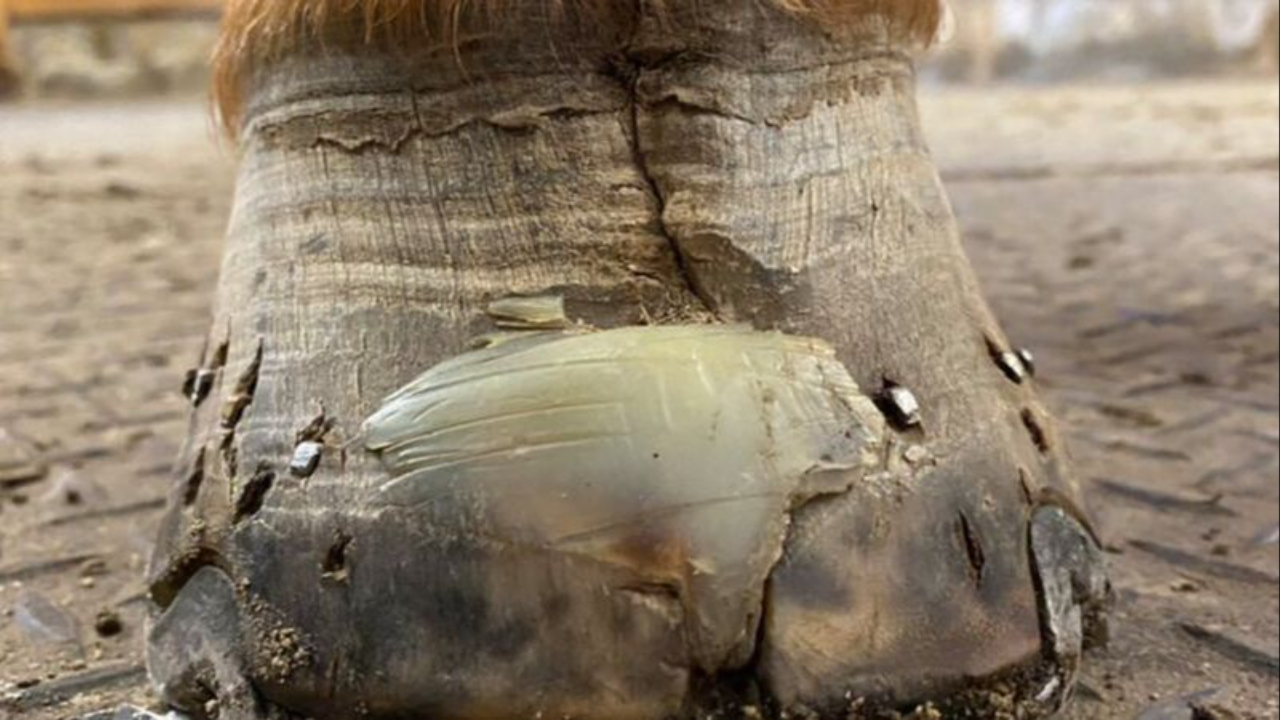
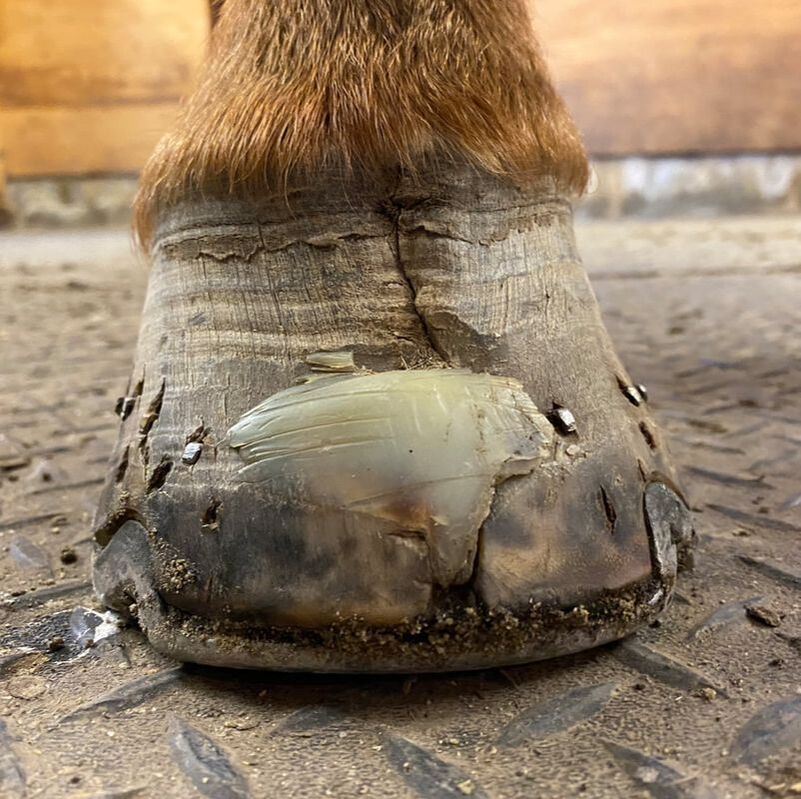
Dixie is a QH mare, who has suffered with this toe crack for several years. Her current owner purchased her in the spring of 2000 and had been working with a vet and corrective farrier for 8 months without significant progress. She decided to try a different approach and brought her here to OKSNHC for rehab in January 2021.
The album below shows the before photos and first trim results.
January 23 2021
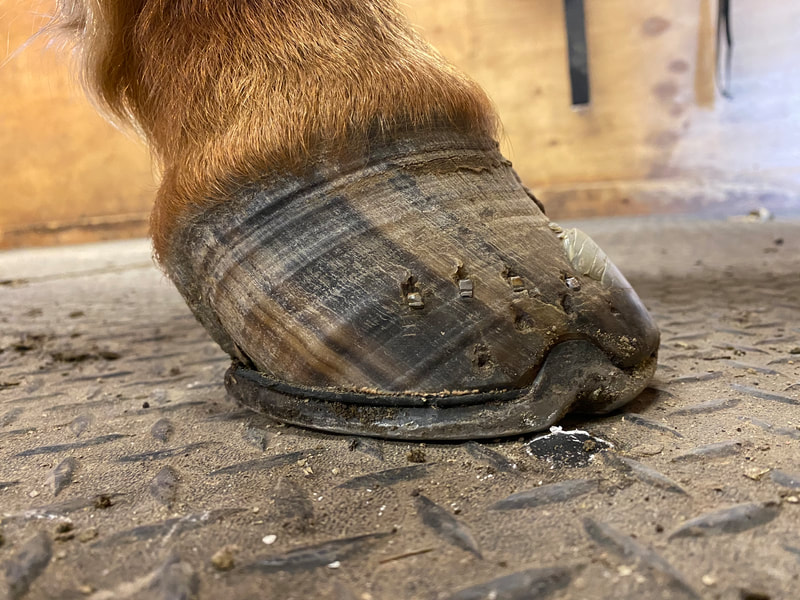
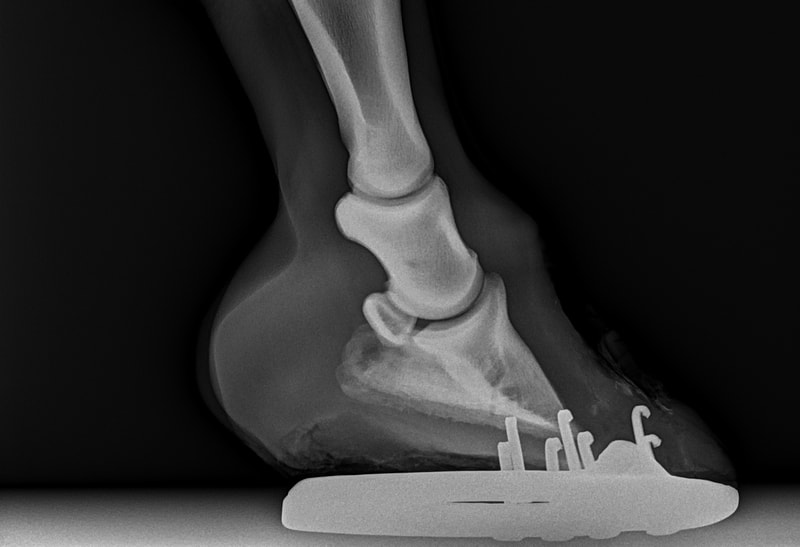
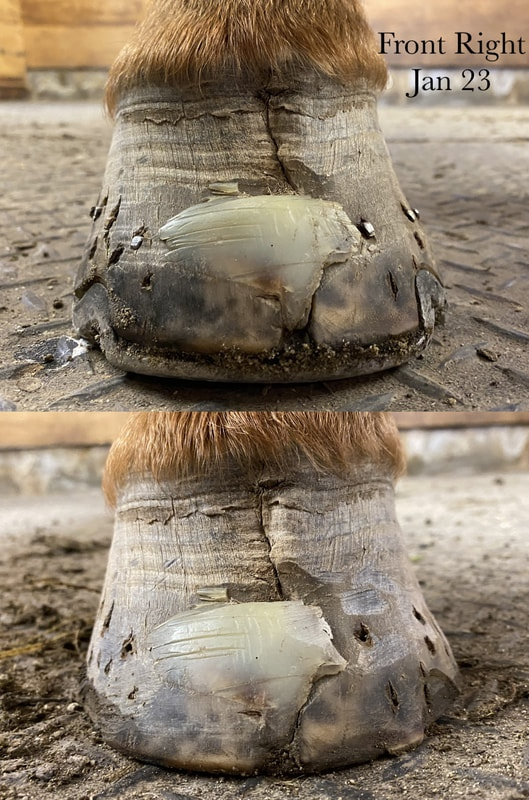
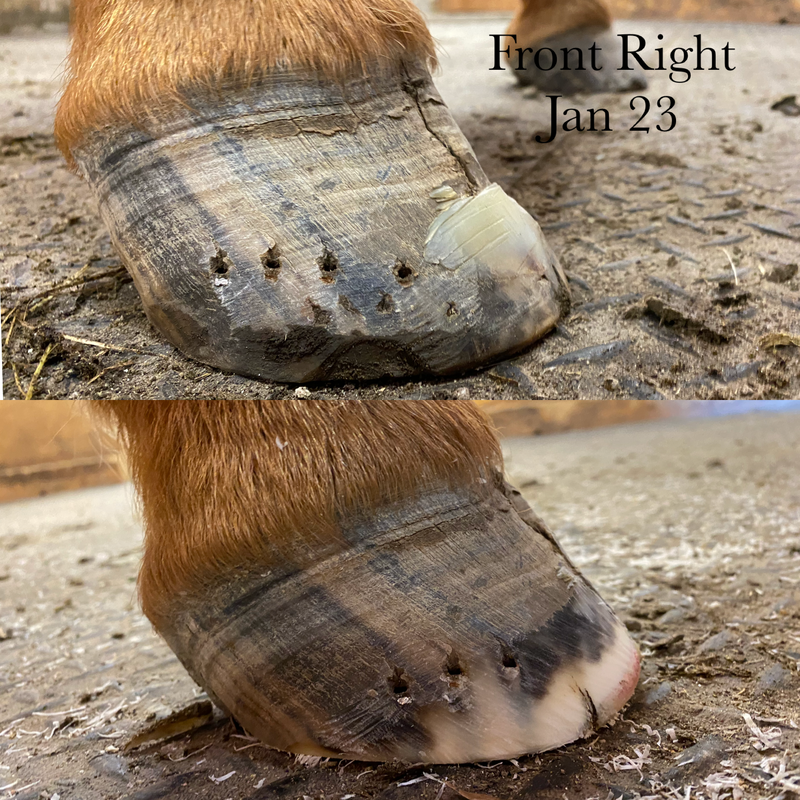
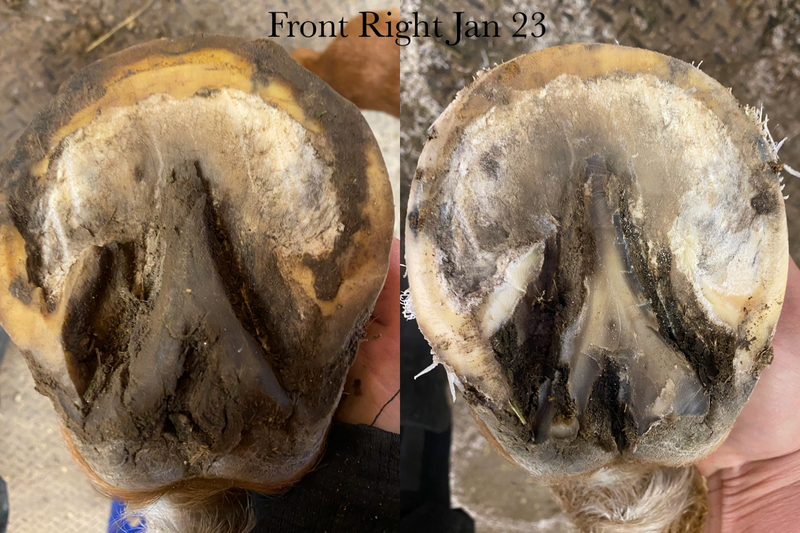
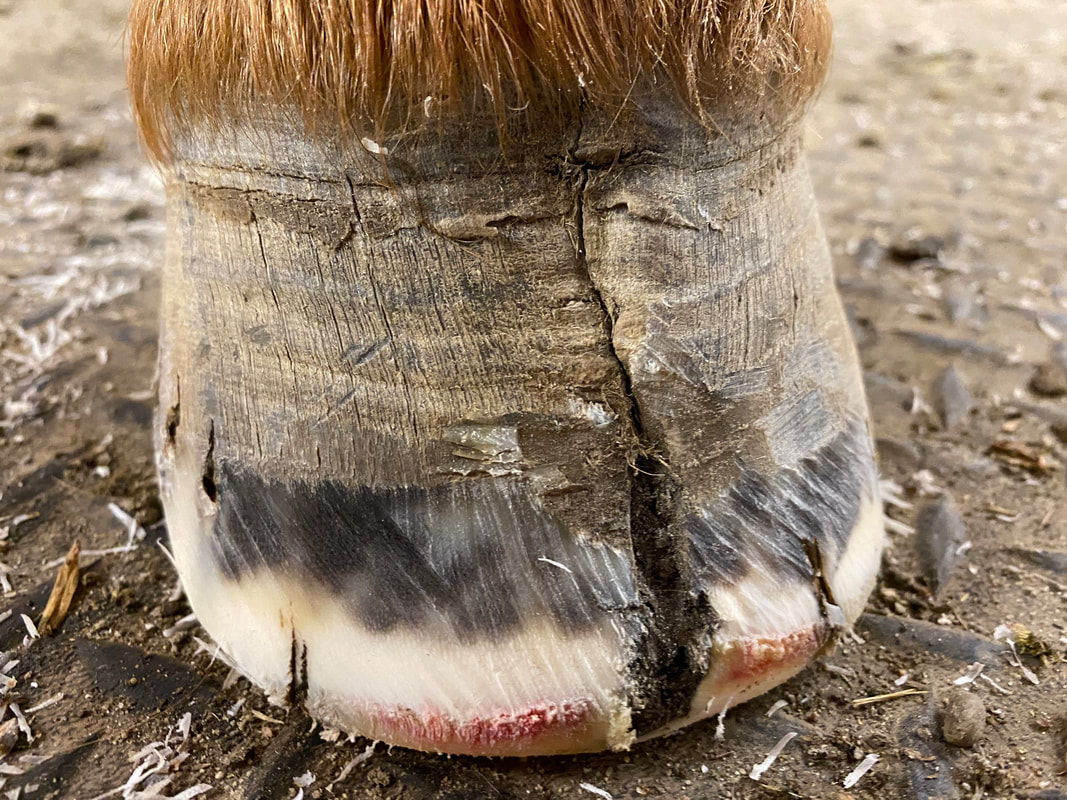
I will update this blog as we progress. Currently I have applied a trim, and opted to cast her hooves and nail on composite shoes over the casts. I chose this approach to give her stability in the hoof capsule via the casting and to create "artificial concavity" with the composite shoe to help unload the coffin bone from ground pressure due to a lack of hoof wall connection and a sunken coffin bone.
February 8 2021
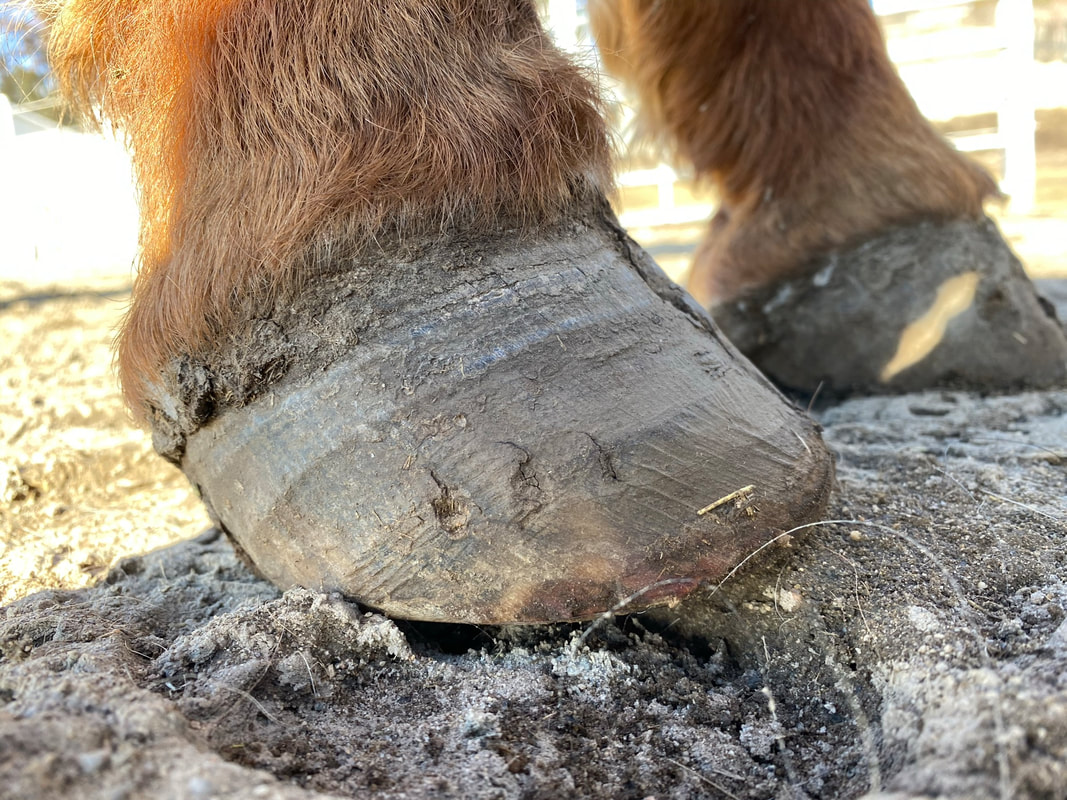
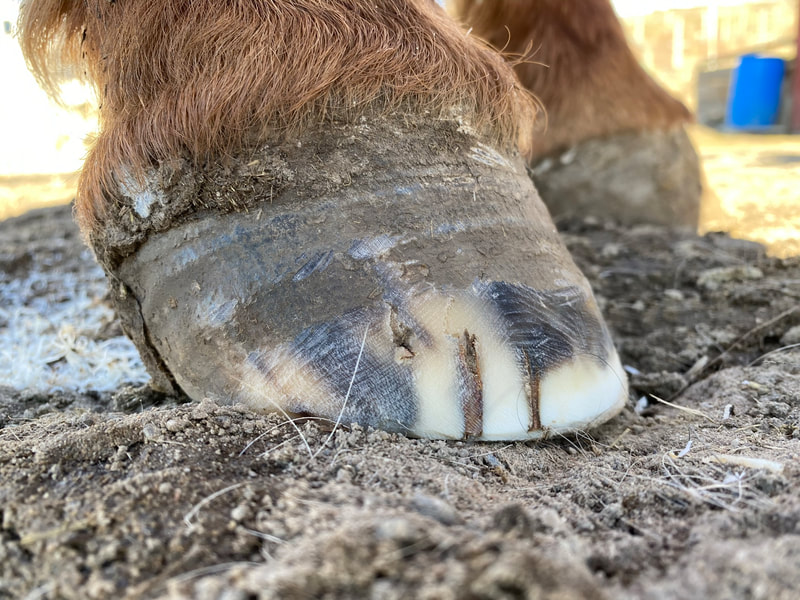
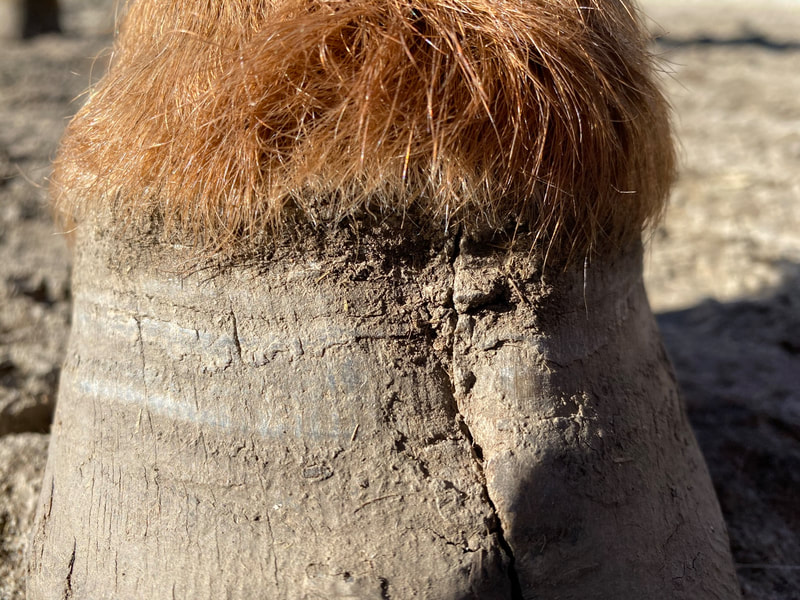
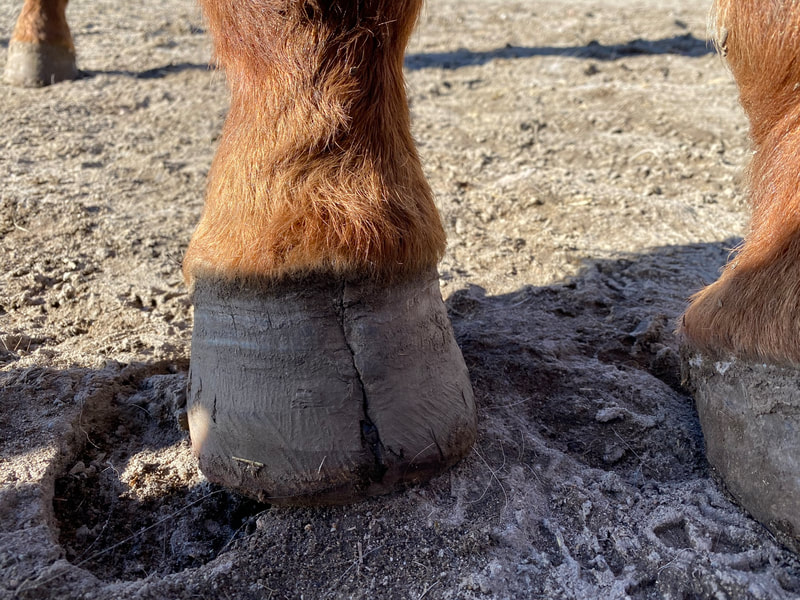
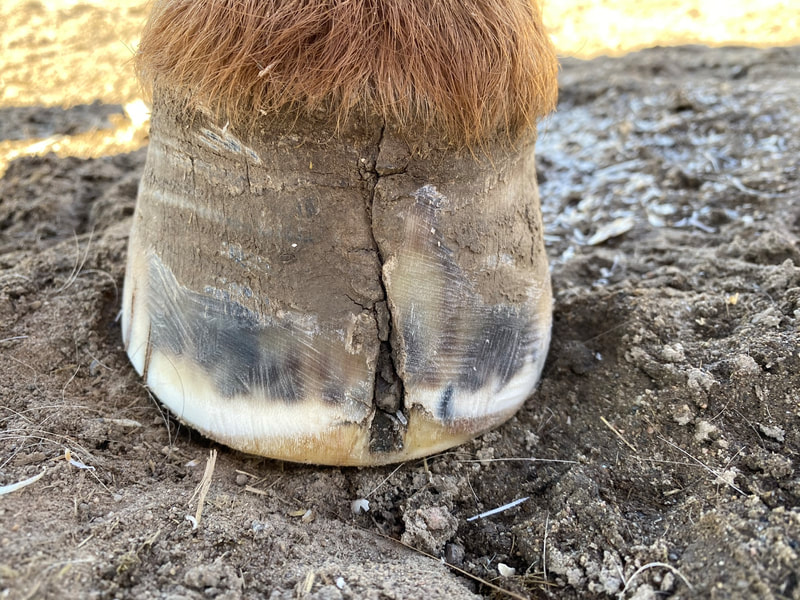
My plan this trim was to further reduce the long toe and just see how the new growth is coming in. It has only been a couple of weeks since the last trim so not a ton of new growth, but overall I am happy with the progress. Today I opted to cast only and when these wear off in 1-2 weeks I will soak again to treat that crack for fungus and bacteria and likely apply casting and composite shoes again, though she seemed just as comfortable in the casting alone without the composites.
March 2 2021
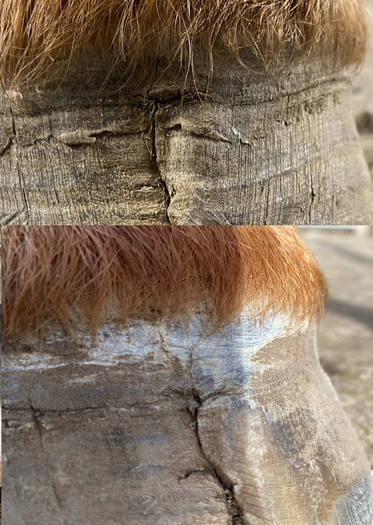
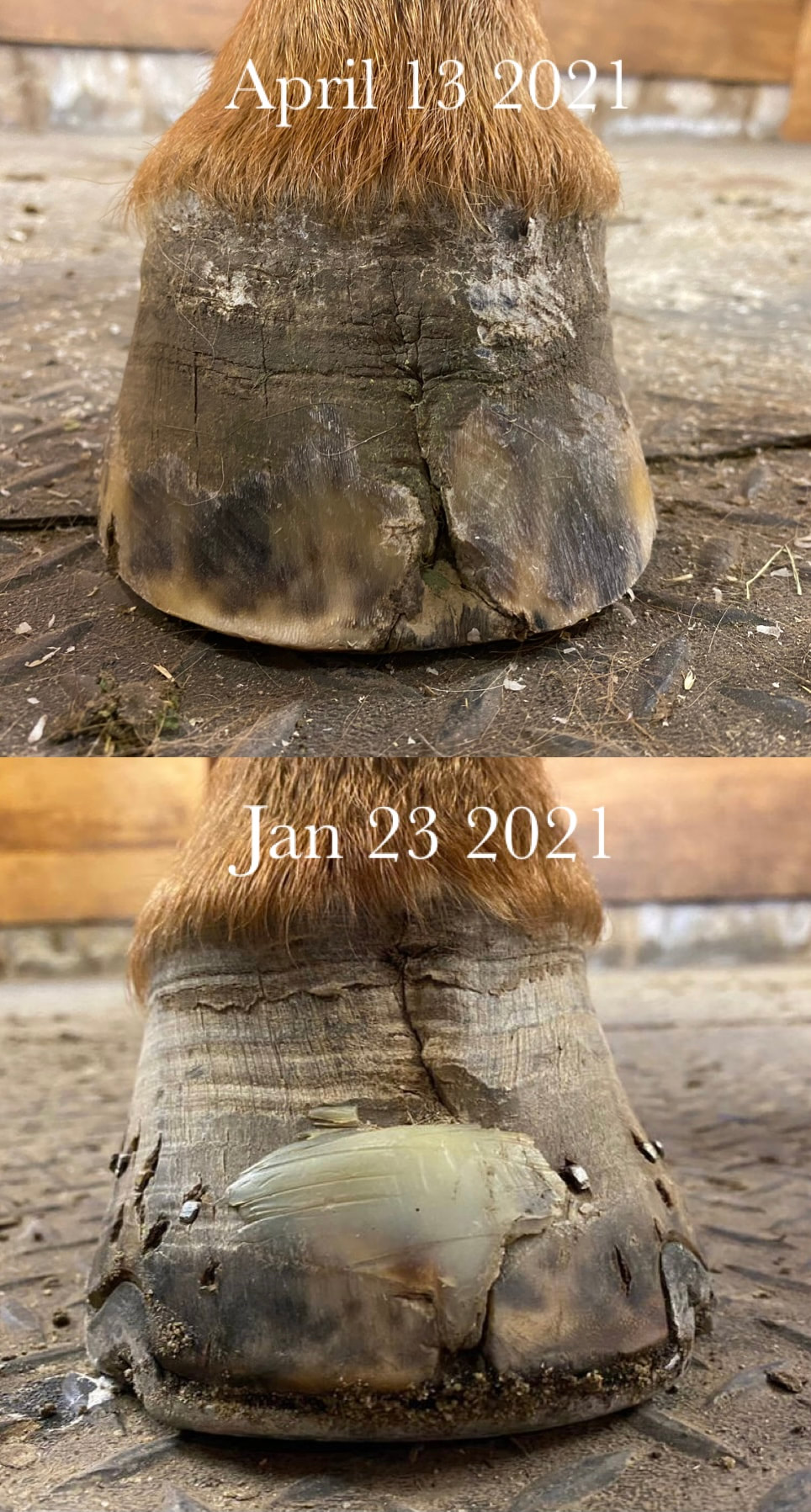
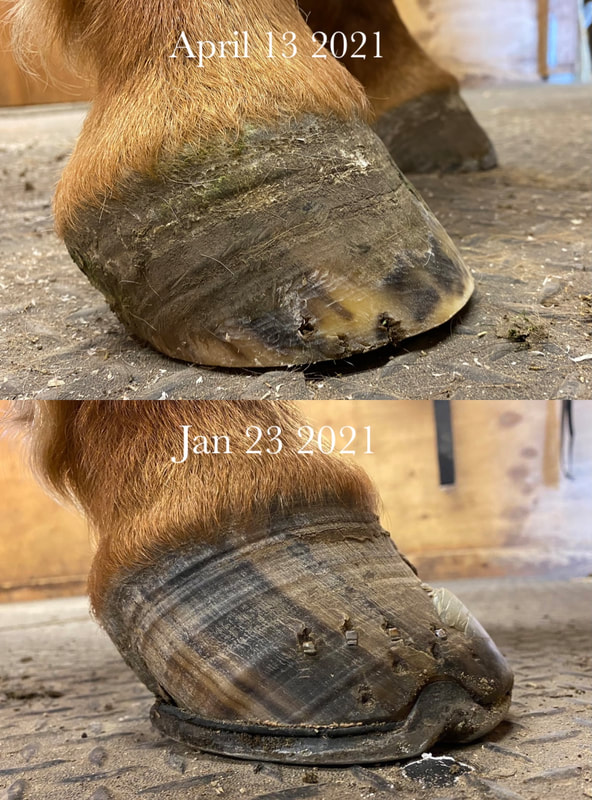
This was the first trim that I was able to lower the heels and quarters to a normal level as I planned to apply composite shoes to create the "artificial concavity" that I have been achieving by leaving them high. Her sole is still very flat, though there is concavity starting to form. The crack on the FR is also starting to grow down from the coronary band closed. This is extremely exciting as this mare has had this crack for 5 years! Overall, there is about an 3/4 of an inch of tighter new growth at the coronary band since I began to trim her on January 23 2021. I applied composite shoes, packed with Artimud, and plan to leave them on until early April. She was off at the trot before the trim and slightly worse after after. I believe this is due both the shorter trim to accommodate the composites, and to corium inflammation due to the flat sole.
A comparison from Jan 23 (top) to Mar 2 (bottom).
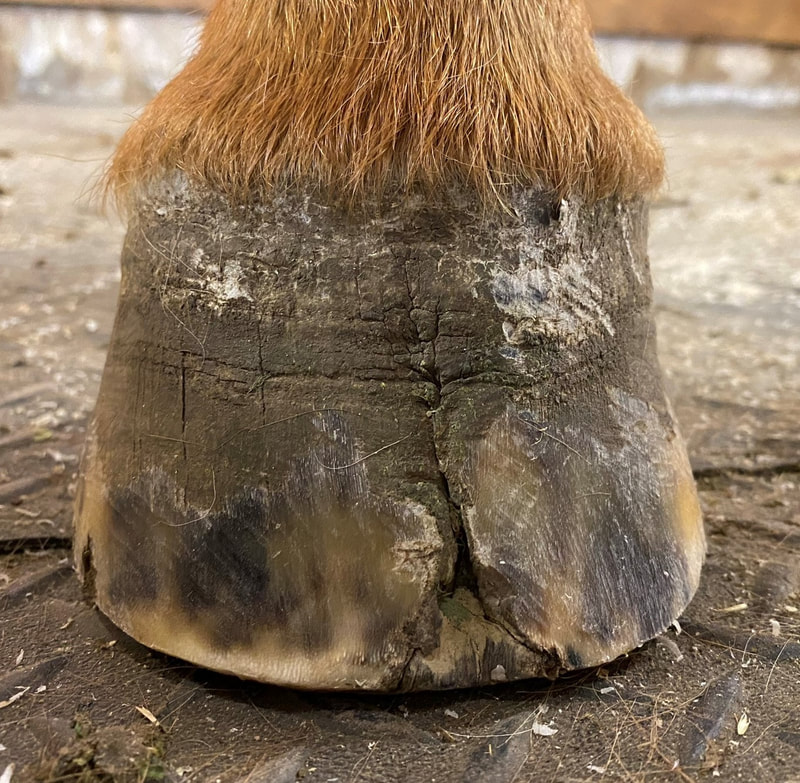
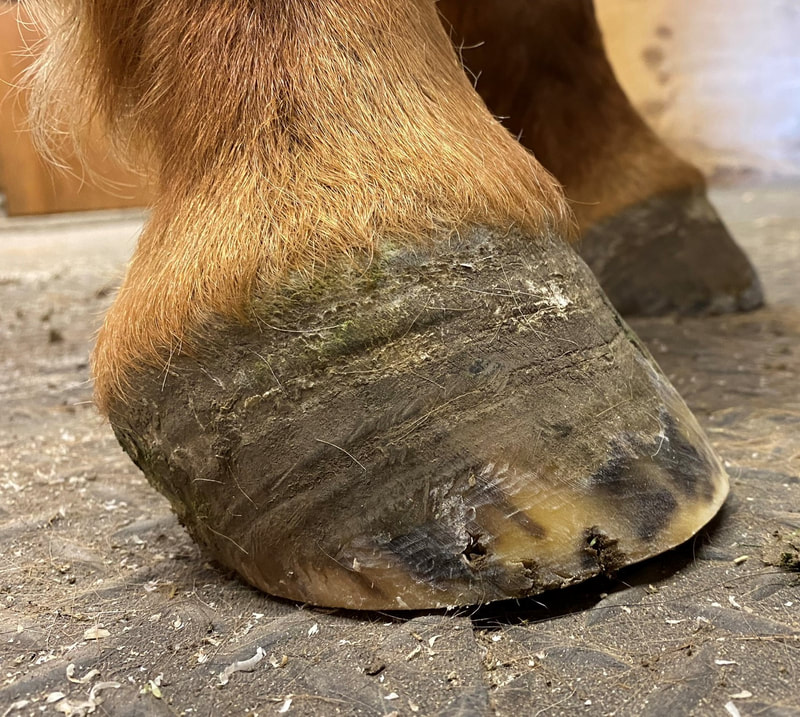
April 13 2021 Trim
April 28 Trim and Composite Application
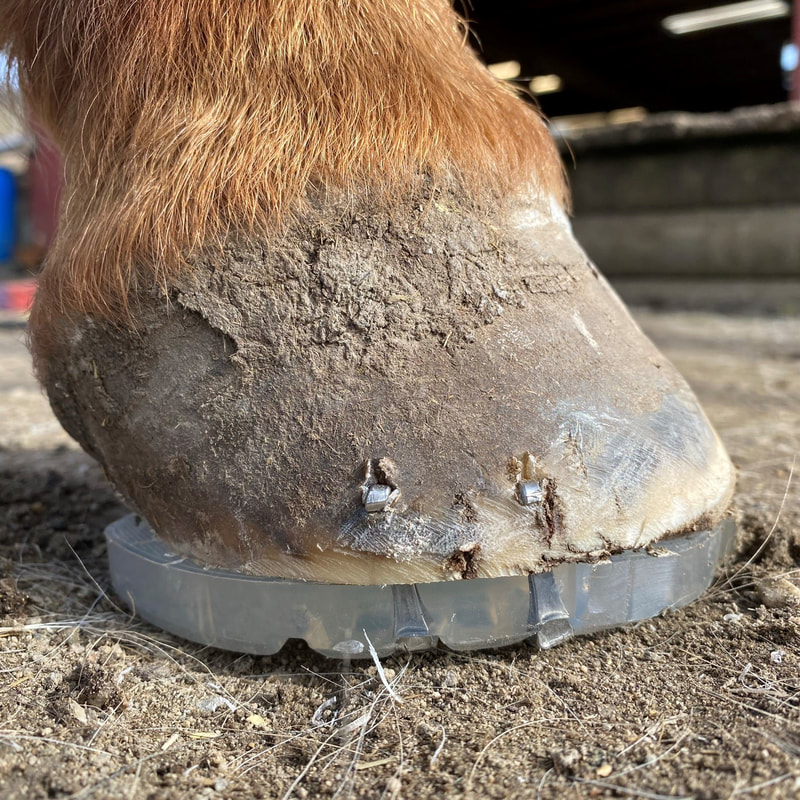
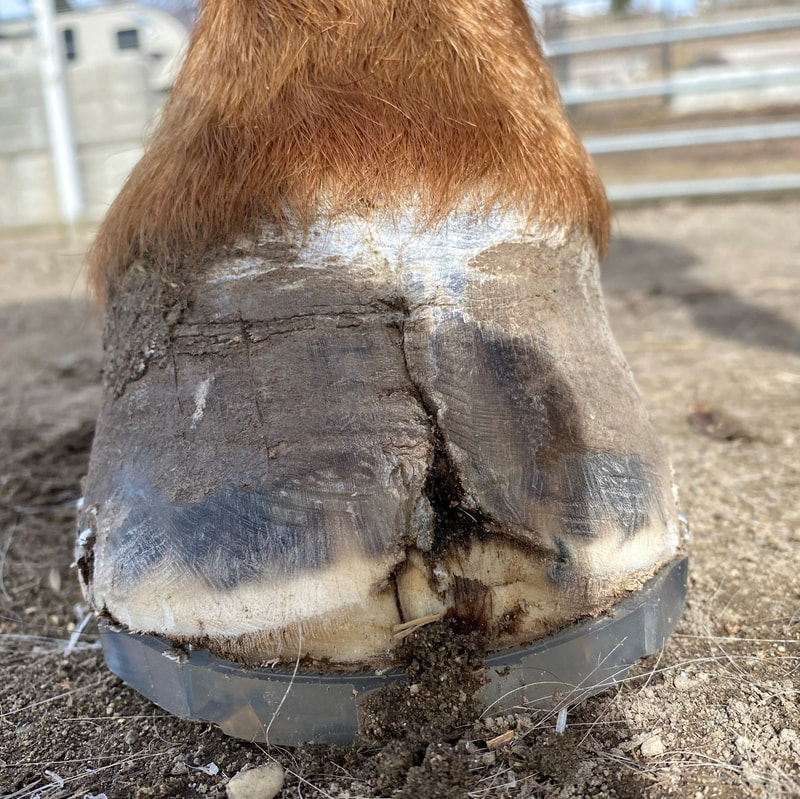
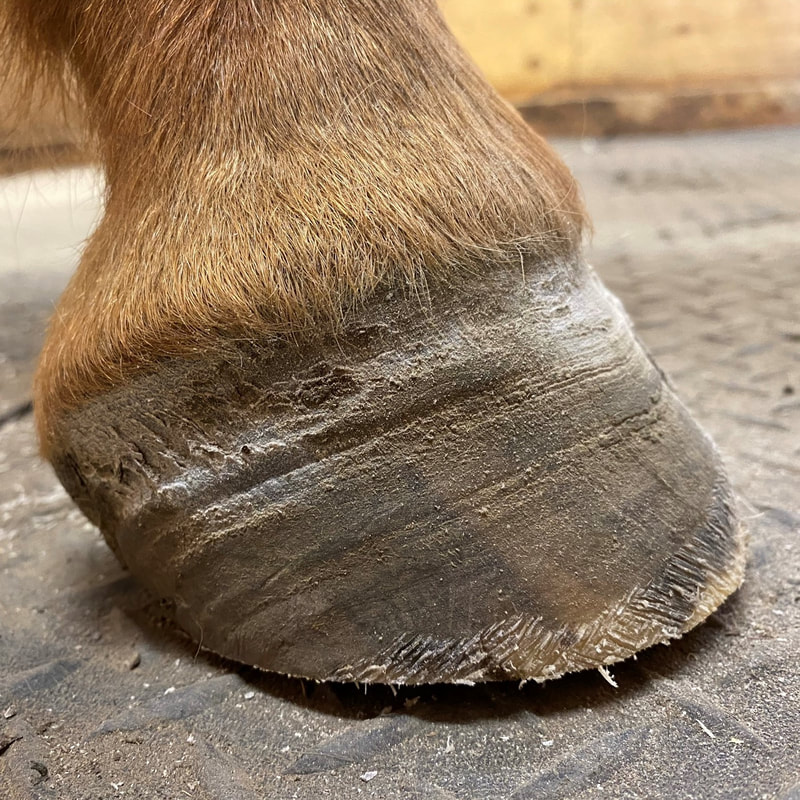
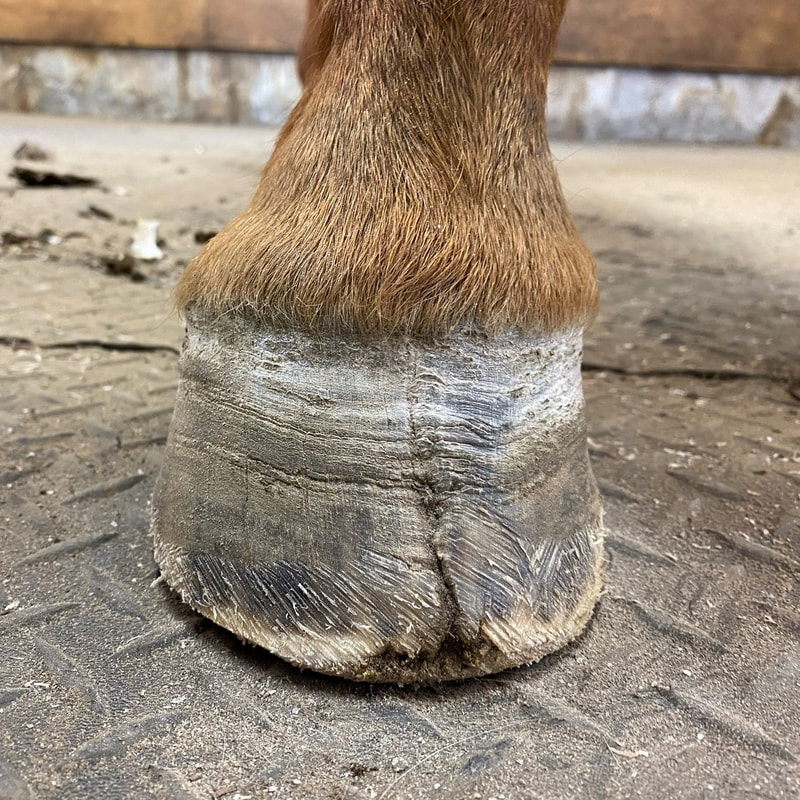
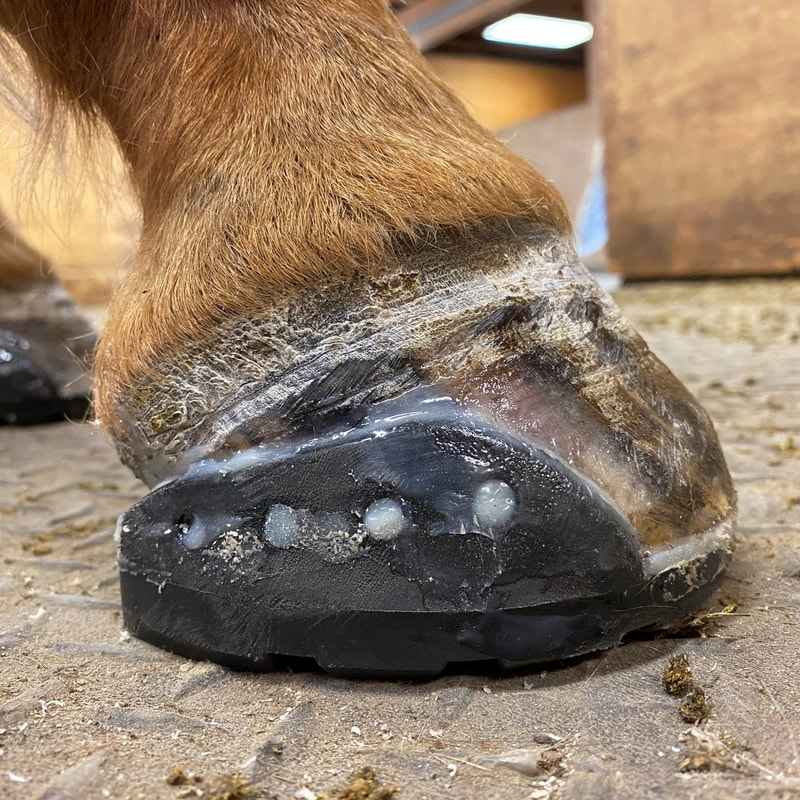
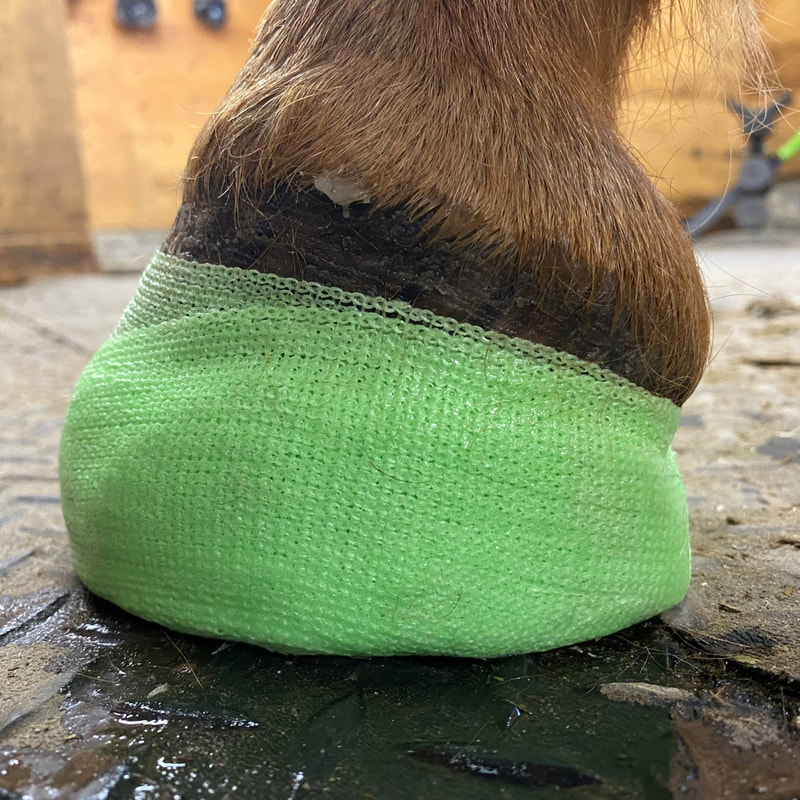
Overall Dixie has been doing well, but I felt like there was too much pressure on the crack, causing it to continue up into the new growth, just superficially, I trimmed her toe back and for the first time was able to remove the excess heel and quarter that I had been leaving to give her artificial concavity. I applied a glue on Easyshoe Performance, and wrapped in 1/2 a roll of 3M casting to further secure the glue. I also packed the Easyshoe with a soft sole packing. She is moving very sound in this set up. You can see on the glue application that I set the shoe right back to where I wanted her breakover to be. This is extremely important in reducing the leverage on the toe crack. If the shoe is set too far forward as seen in the picture above, the leverage on the crack would be increased causing it to continue to split.
June 15 2021
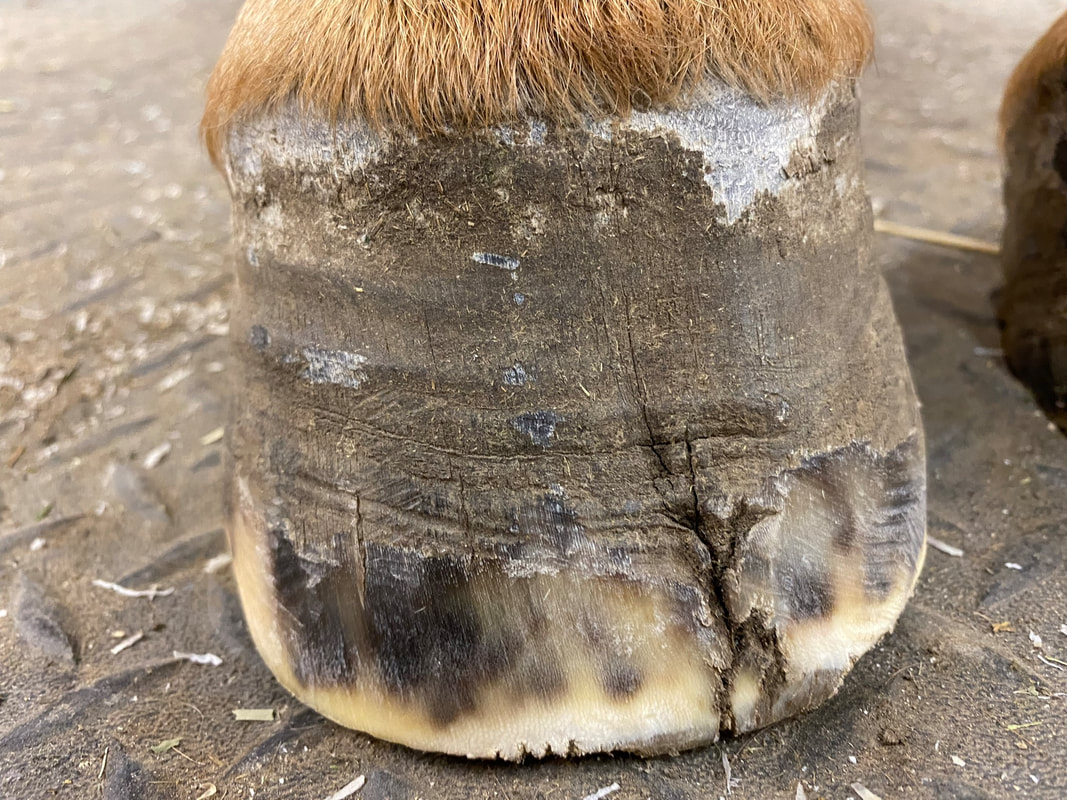
August 9 2021 The End of Dixie's Rehab
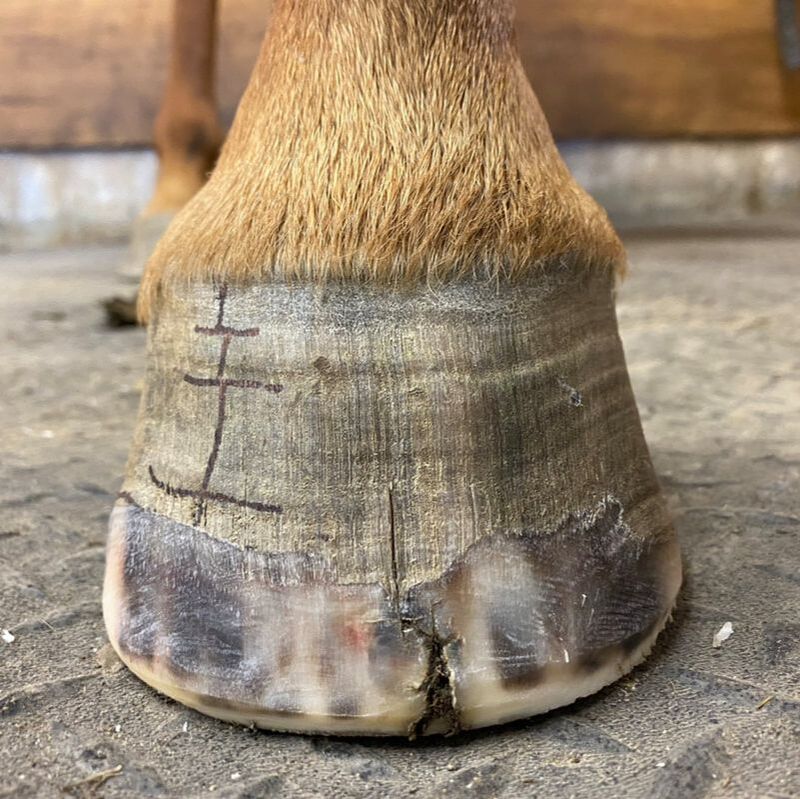
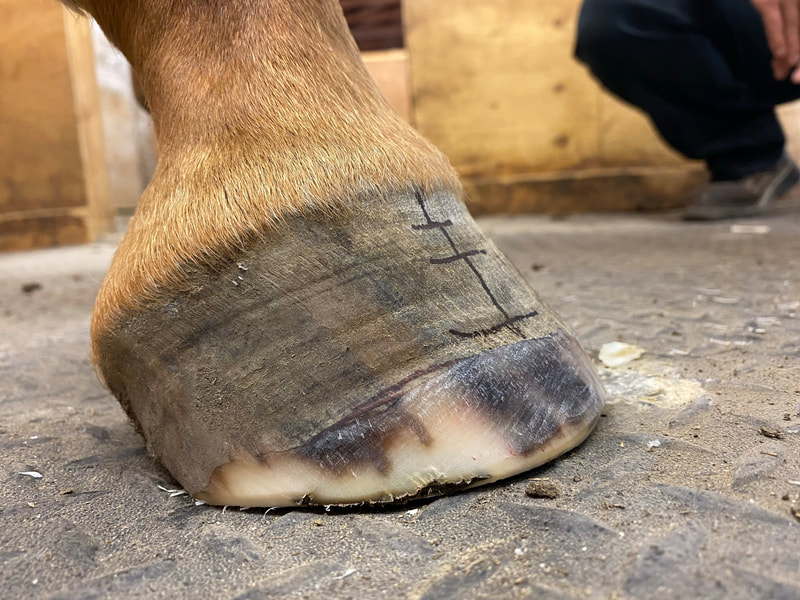
It's a bittersweet moment for us here at OKSNHC as Dixie gets ready to go home! Just over 6 months have passed, and Dixie has grown in almost an entirely new hoof! The crack is almost grown out, likely just one more trim will see that through. Dixie's home is about 2.5 hours from me, so one of my students will now be taking over her care along side her owner.
The small vertical crack you can see just above the trimmed area is superficial and will also grow out within the next couple of trims. Over the next 6 months, with proper trimming I expect Dixie to be able to grow in an even better connected hoof wall. You can see the marker lines I drew in the after trim pic showing the various levels of wall angle deviation. These angles are based on hoof leverage and reducing this leverage was my entire goal during this rehab resulting in being bale to grow out the crack.
For over 5 years Dixie suffered with that crack, being worked on by some very experienced and knowledgeable farriers. Clearly from the before picture you can see that they tried everything they knew. Shoes to hold the crack together, glue to help keep it together... I have always and will always maintain, it's not a shod vs barefoot debate, its the trim under the shoe or without the shoe that counts.
Throughout the rehab Dixie had highs and lows. There were some moments she required a composite shoe or hoof cast to be comfortable, and now 6 months later she is sound barefoot. Her transition is not entirely complete, she will require hoof boots for trail riding on rocky ground until she can build more callous and get used to the terrain, but in the paddock, pasture and arena she is 100% sound barefoot.